
When a raccoon is your neighbor: A reminder that we are not separate from nature
As we enter a new season, I think about the change that comes with it. A change in the weather, a change in daylight, a change in our environment, and perhaps a change in attitudes. This winter was unusual, and the transition between cold and warm hasn’t feel as abrupt (minus the 80-degree days in March). Still, I am drawn to the curiosity that change stirs within me, and to how society seems to shift alongside our plant-like neighbors.
Last night, while enjoying the beautiful spring evening, I noticed an unlikely visitor hanging out in my children’s tree fort. A raccoon, in the evening light, was awaking from its slumber and meandering through the tree fort and up the tree, getting ready to explore for the evening. It is unusual to see a raccoon during the day, so I was both startled at its presence and intrigued by its movements and daily activities. I wondered if it, too, was confused about the recent time change and the unusually warm spring day. While I can only guess how this raccoon feels, it is a reminder that we are more connected to our non-human neighbors than we may think. We are co-existing, sharing the same trees, sunshine, and grass - we are not separate; but coexsisting in the same space and time.
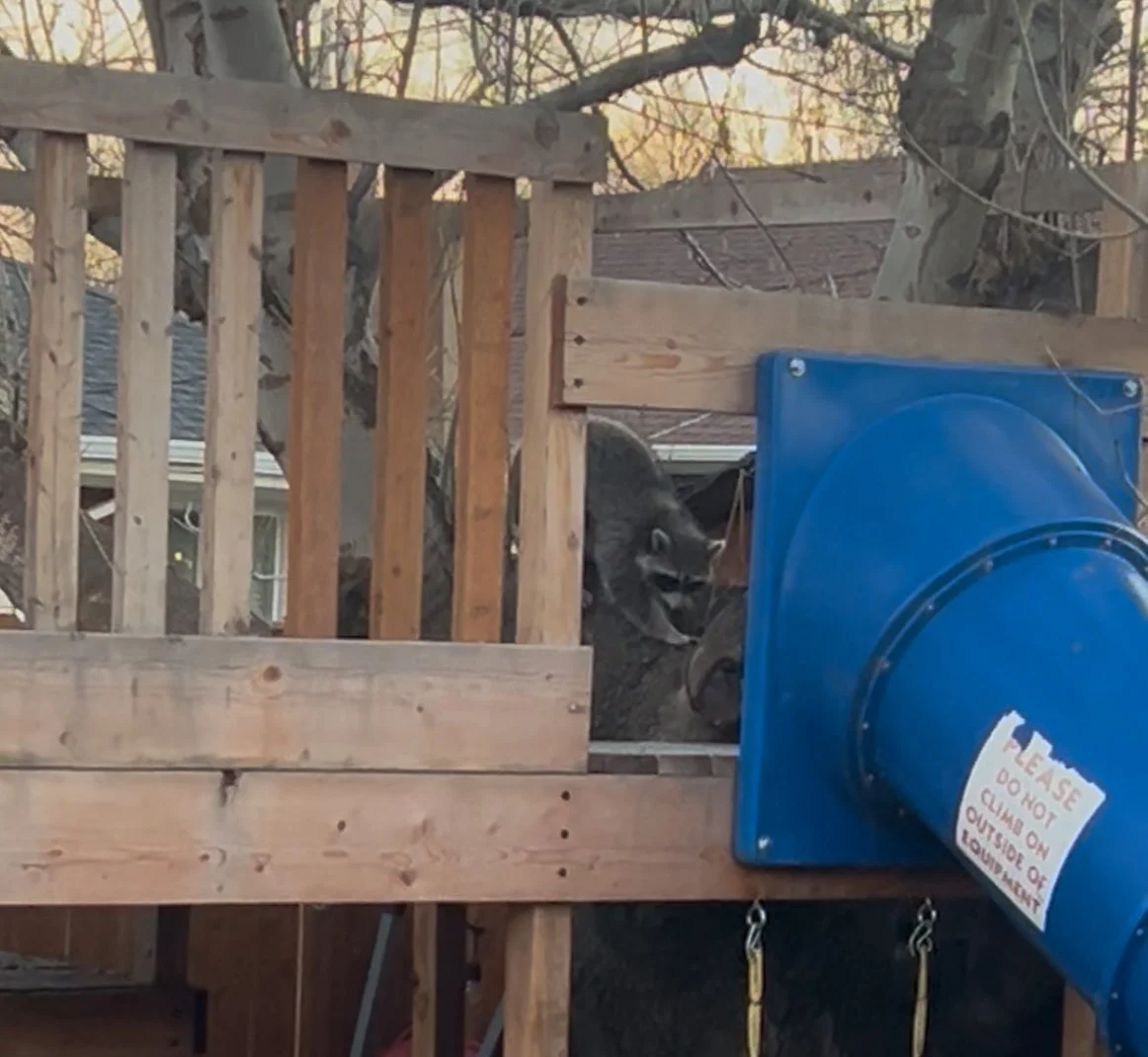
My neighbor, the raccoon.
Understanding that we are not separate from nature may be the key to initiating the necessary changes in the nature and health space. A fundamental thought that may change the way people engage with nature, take care of nature, and celebrate the curiosity of our connection to nature. Yet, we are increasingly disconnected. According to the National Recreation and Park Association, 43% of Americans spend less than 30 minutes outside per day, and on average, according to the APM Research Lab, 16% of Americans do not spend any free time outdoors. We are less connected to nature than ever. A UK study found that human connection to nature has declined by 60% over the last 200 years. These statistics serve as a reminder that our society has changed, but it was not that long ago that we lived harmoniously with nature.
Scholars are considering how, as a society, we might reconnect with nature and how it could be used to address the global environmental crisis. A framework, designed by Ives et al. (2018), proposes five types of connection to nature: material (using nature), experiential (direct contact with nature), cognitive (attitudes toward nature), emotional (feelings and attachment to nature), and philosophical (worldview about nature). Ives argues that the research is not entirely aligned with what it actually means to reconnect to nature, but that this reconnection is critical for our society and our environment. In the article, the authors highlight practical examples of reconnection based on the five types of connection:
Material
Local food production
Community gardens
Shorter supply chains
Experiential
Outdoor education
Greater park access
Cognitive and emotional
Learning about ecosystems
Developing attachment to a place
Philosophical
Nature-based art
Finding nature in religion and spirituality
Mindfulness in nature
The key to reconnecting with nature is an internal shift in values, worldviews, feelings, and beliefs. Although policies and systems are important for reconnecting with nature, people and society need to feel connected to nature on an internal level before those systemic changes can be made. Connection to nature is not just one thing; it is nonlinear and multifaceted.
As I reflect on the raccoon’s visit, I’m reminded that these moments of shared space—unexpected, a little mysterious, and deeply ordinary—are invitations to pay attention to our place in the world. The raccoon wasn’t just a visitor; it was a neighbor, adapting to seasonal changes just as we are. Our curiosity about its presence mirrors the curiosity we can bring to our own relationship with nature.
Reconnecting with nature doesn’t have to mean grand gestures or dramatic lifestyle changes. Sometimes, it starts with noticing the life around us—whether it’s a raccoon in a tree fort or the changing light of a new season—and letting that awareness shift how we think, feel, and act. By recognizing our shared existence with all creatures, we can begin to close the gap between ourselves and the natural world. That’s where real change begins: not in isolation, but in connection.